EN
 DE
 ES
 FR
 NL
 PT
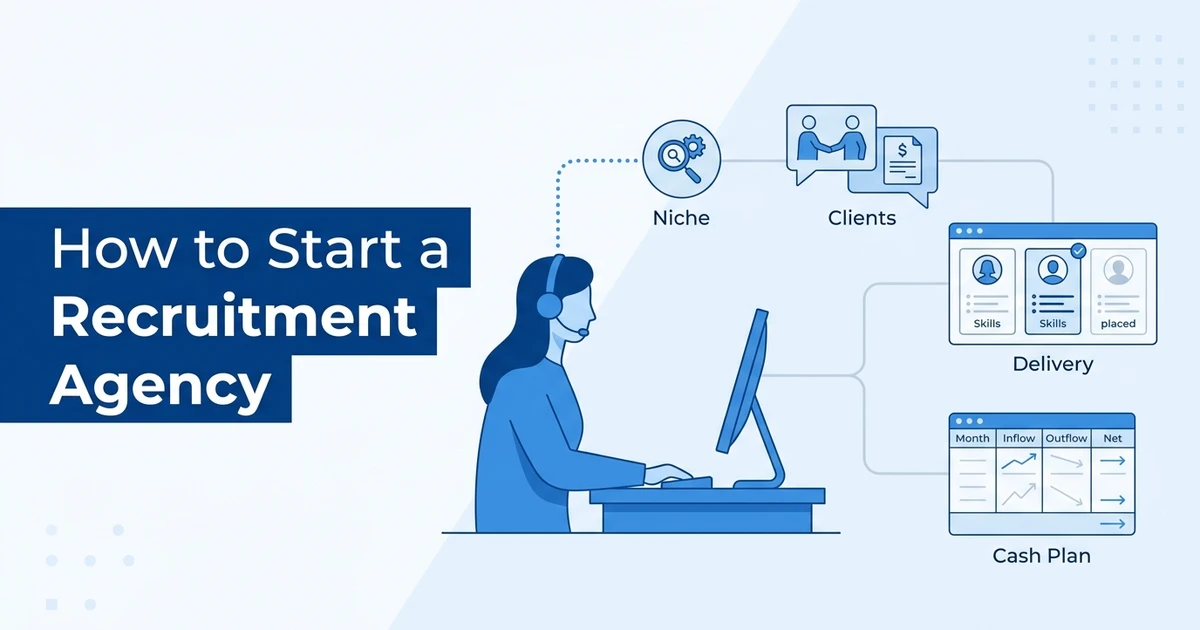


Quick Answer: To start a recruitment agency, choose a specialism you can serve credibly, validate that employers will discuss real hiring needs with you, and plan cash around the time between work, invoice, and payment. Check local rules, win initial clients, and add tools or people only when your workflow and finances justify them.
If you are asking how to start a recruitment agency, think beyond working independently as a recruiter. You need a service that solves a clear hiring problem, agreed fees, and an operating process you can deliver consistently.
This guide is for experienced recruiters and talent consultants considering an independent agency. It lays out a practical sequence for validating the idea, planning the finances, and building the first version of your operation.
How to start a recruitment agency without spending too early?
It is easy to treat setup as the first milestone: register a company, subscribe to software, and build a website. Those tasks do not show whether employers will trust you with live vacancies or agree to your terms.
Start with the commercial question: can you reach a buyer, explain a hiring problem, and get a serious conversation about a role? Test the niche and offer before taking on recurring costs.
Business survival varies by location, birth year, and business cycle. U.S. Bureau of Labor Statistics data show different one-year survival rates across census divisions and years; the figures describe U.S. establishments broadly, not recruitment agencies. Use local evidence and a conservative runway plan, not a national average as a forecast for your firm. See the BLS survival data and its geographic breakdown.
How to choose a recruitment niche you can serve credibly
A niche helps focus your research, conversations, and delivery. It need not be one job title: you might focus on a function, seniority level, location, employer type, or hiring model you understand and can serve.
Score possible specialisms against practical questions:
- Can you name employers that hire for these roles and identify the people who influence the decision?
- Do you understand the role well enough to qualify candidates and challenge an unclear brief?
- Can you reach relevant candidates without promising access you cannot deliver?
- Do you know what would make an employer switch from its current approach?
- Can you explain your value in one or two sentences without relying on “we recruit for everyone”?
Use your answers to define an initial client profile and a testable service promise. Interest without a current hiring need is a reason to keep learning, not proof of a viable pipeline.
What should a recruitment agency business plan answer?
You do not need a long document to test an early idea. The U.S. Small Business Administration describes both traditional and lean startup plan formats, noting that a lean plan can summarize a business model on one page while a traditional plan offers more detail. Choose the level that fits the decisions you need to make and any lender or investor requirements. Review the SBA’s business-plan format guidance.
Write down who you serve, the hiring problem you solve, and what your service includes. Then specify the fee model, when fees are earned, payment terms, client-acquisition channels, delivery steps, and the costs and support needed to operate.
Keep assumptions visible. If your forecast depends on a quick signature or every vacancy converting, model a slower case too.
If you want to organize early client conversations and recruiting activity in one place, ATZ CRM has a recruitment CRM for managing client and sales pipelines. Compare it with your actual process and budget before choosing any platform.
How should you plan startup costs and cash runway?
Separate one-time setup costs, monthly commitments, and expenses that rise with activity. Ask local advisers about registration, insurance, accounting, data handling, payroll, and any sector-specific requirements before setting the budget.
Map cash timing, not just annual revenue. Depending on the agreement and hiring process, a fee may be earned, invoiced, and collected at different points. Show what happens if a client pays late, a role pauses, or a placement does not complete.
A simple planning sheet can include:
| Cash question | What to enter |
|---|---|
| Opening funds | Cash available to the business, separate from personal funds you cannot risk |
| Fixed costs | Recurring expenses due even when no placement closes |
| Variable costs | Costs tied to delivery, sourcing, travel, or specialist support |
| Expected receipts | Fee amounts, invoice triggers, and expected payment dates from signed terms |
| Delay scenario | The effect of a slower search, delayed start date, or late invoice payment |
Use the sheet to decide which commitments you can afford now. In the United States, the SBA says registration costs vary by state and business structure, so check local sources rather than copying a generic figure. Check the SBA’s U.S. business-launch guidance.
Which legal and operating requirements depend on your location?
Before accepting work, confirm the rules that apply where you and your clients operate. Requirements can differ by jurisdiction and service model, especially if you supply temporary workers, employ staff, process candidate information, or handle payroll.
Use this as a question list for the relevant authority or qualified adviser, not as legal advice:
- What business registration and tax steps apply to this entity and location?
- Do recruitment or employment-agency rules apply to the services you plan to offer?
- What written terms must clients and candidates receive?
- What privacy, consent, retention, and data-transfer rules govern candidate records?
- If you supply workers, who employs them and who handles payroll, insurance, and workplace obligations?
- Which insurance policies are required or prudent for your contract and client base?
Do not assume that a rule in one country applies elsewhere. Have local contracts spell out fees, guarantees, candidate data, and any worker-supply obligations.
How can a new agency win its first clients before it scales?
List employers that match your specialism. Research their hiring context, identify a relevant contact, and ask about a specific role or recurring challenge. A focused conversation is more useful than claiming you can fill every vacancy.
Use discovery calls to understand the role, urgency, decision process, compensation, interview availability, and previous search problems. Agree on a next step before delivery. If the client is not ready to sign terms or share a clear brief, do not count it as committed revenue.
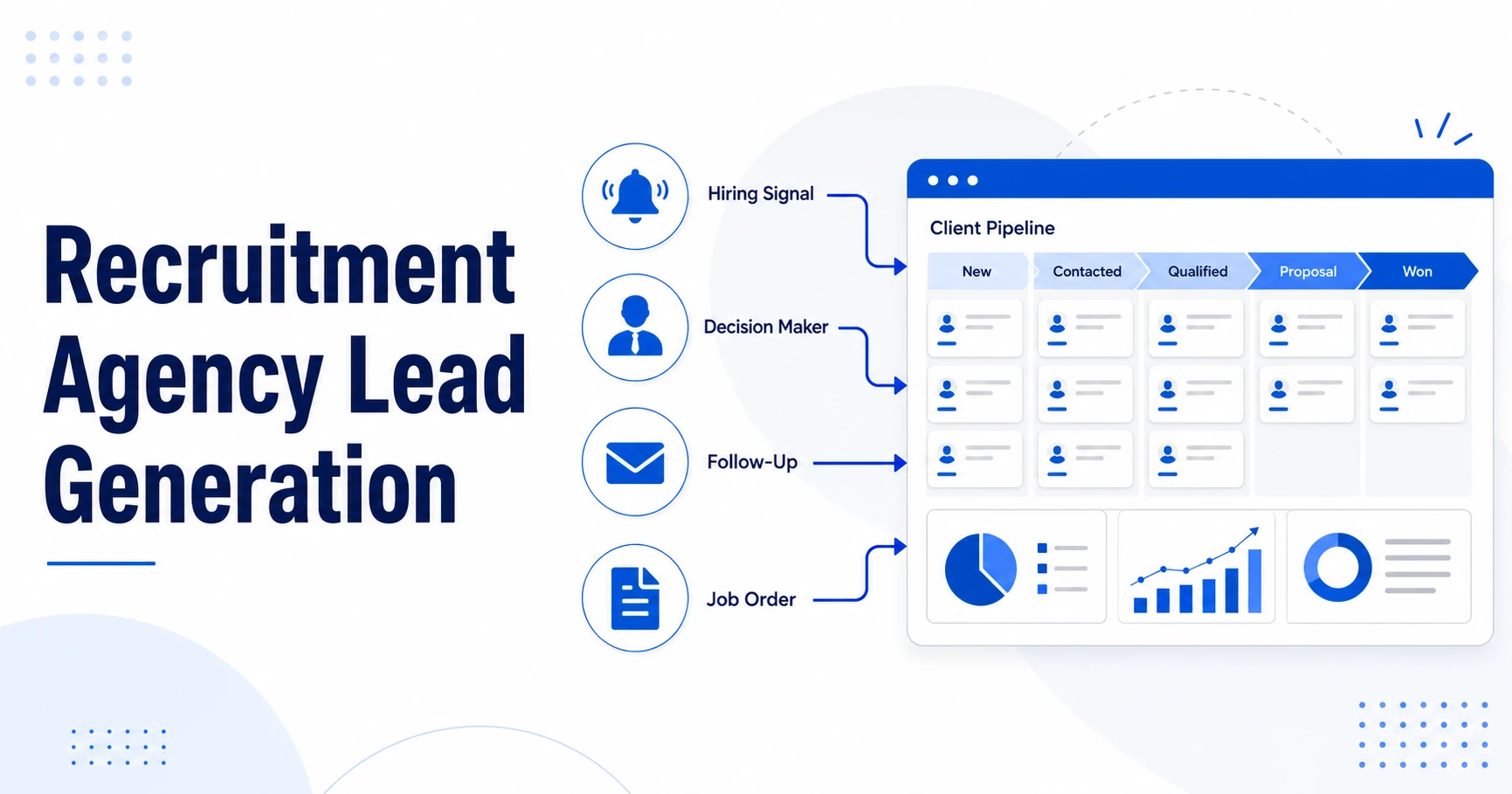
Build a repeatable follow-up habit. Record who you contacted, what you learned, when you should follow up, and whether the account has a live hiring need. A business development CRM for recruiters can help you think through the information to track, while this guide to recruitment agency lead generation covers more acquisition approaches.
What should the first 90 days look like?
Use the first three months as a sequence of decisions, not a guarantee that the agency will reach a particular revenue target.
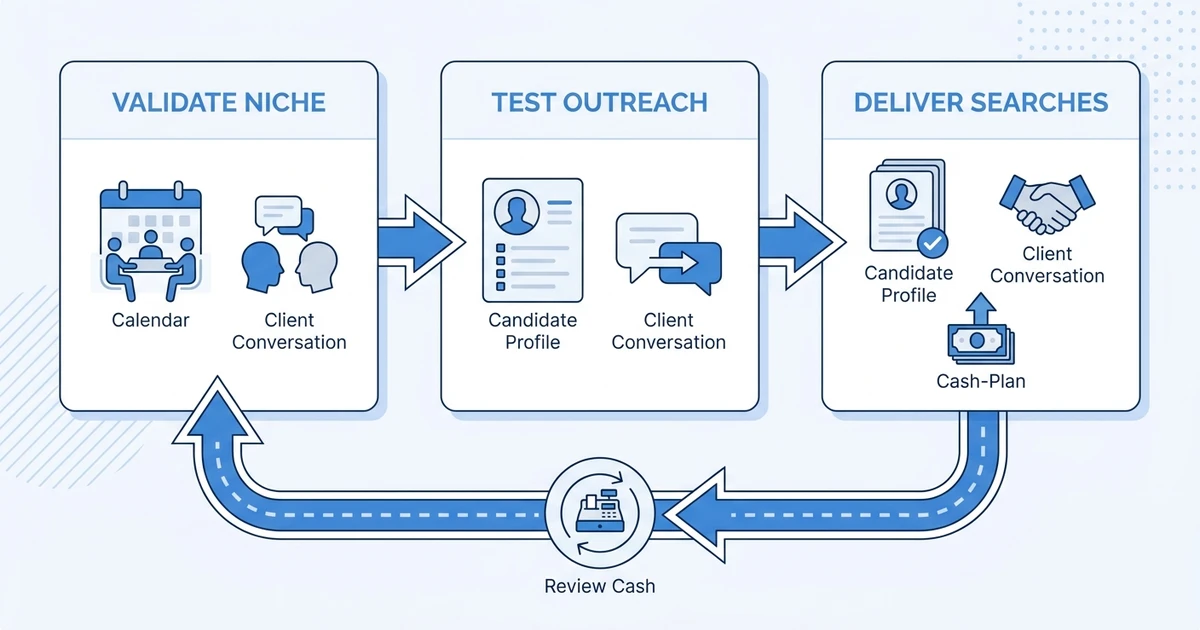
Days 1–30: validate the offer. Choose one initial specialism, draft your service promise, interview potential buyers, and check the relevant setup requirements. Record objections and revise your offer where the evidence points to a mismatch.
Days 31–60: test client acquisition. Start targeted outreach, hold discovery conversations, and refine your qualification questions. Confirm written fee and service terms before taking on a search.
Days 61–90: deliver and review. Work a manageable number of searches, communicate consistently, document the delivery process, and review cash timing. Decide which activity to repeat, change, or stop before expanding expenses or adding capacity.
If client discussions are not producing credible job requirements, revisit the niche or message. If you have work but delivery is straining your available time, improve the workflow before adding more volume.
Which tools does a new recruitment agency need first?
Choose systems around validated work. You may need to track client contacts, job requirements, candidates, interview stages, communication, invoices, and follow-up tasks. The right level of connection depends on workload and how many people share delivery.
Before paying for a platform, list your workflows and see whether a trial or demonstration reflects them. Confirm user limits, data import, integrations, and total cost. Keep accounting and legal records in appropriate systems.
A practical buying checklist:
- Can you find the current status and next action for each client, job, and candidate?
- Can the people involved see who owns the next step?
- Does it fit your current email, calendar, and job-posting workflow?
- Can you export or retrieve your records if you change systems?
- Does the price and plan limit match your current team and expected use?
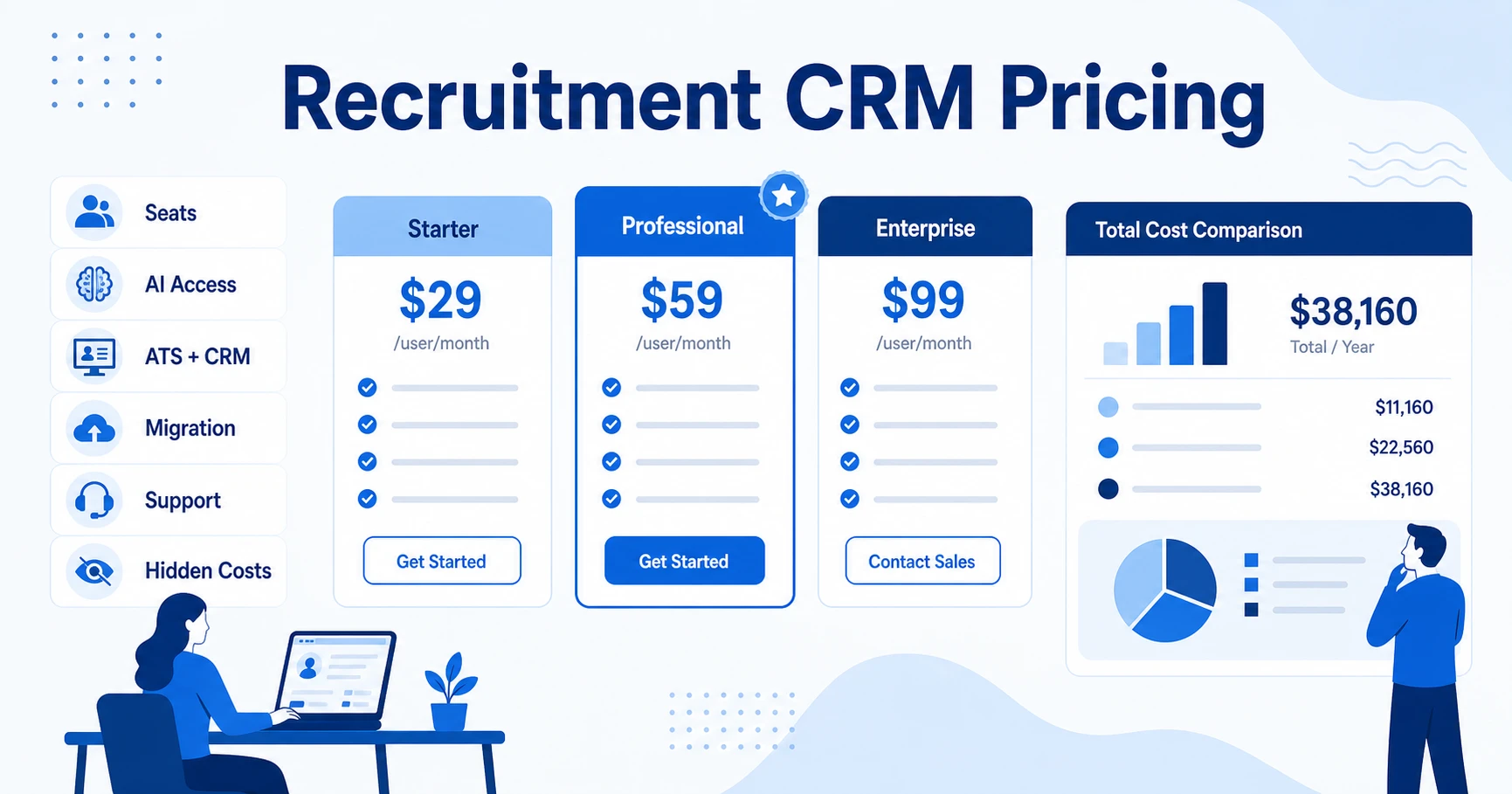
See how recruitment CRM pricing can be compared alongside your other operating costs. The goal is to support a validated process, not to buy software in place of one.
Frequently Asked Questions
How do you start a recruitment agency?
Choose a specialism you can serve, confirm that employers will discuss real needs, and plan fees, costs, and cash timing. Check local business and recruitment rules, agree clear client terms, and build a delivery process you can manage.
Can you start a recruitment agency by yourself?
Yes, if you can cover client development, candidate delivery, communication, and administration at a manageable workload. Define what you will not take on yet, and add help when demand and cash support it.
How much money do you need to start a recruitment agency?
There is no universal amount. Registration, insurance, payroll, technology, and working-capital needs depend on location and business model, so build a local budget and include a slower-revenue scenario.
Do you need a license to start a recruitment agency?
That depends on the jurisdiction and the services you provide. Check with the appropriate local authority before you place candidates or supply workers.
How long does it take to make a first placement?
There is no reliable single timeline. Client access, role requirements, candidate availability, interview decisions, and payment terms all affect how long a search takes.
Conclusion: validate the business before expanding it
A strong launch starts with a specific buyer and a problem you can solve, then tests whether clients will trust you with real work. Plan cash around uncertainty, check local requirements, and keep your first operating model small enough to improve.
Use what you learn from client conversations and delivery to decide what to invest in next. If you want to see whether ATZ CRM’s recruitment CRM for client and sales pipelines fits, review its client, job, and candidate steps against your own process.