


Quick Answer: An ATS tracks active applicants through your hiring pipeline, while a CRM nurtures passive candidates and client relationships before a role is ready. Recruitment agencies usually need both, especially when sourcing, submissions, client follow-ups, and placements happen in the same workflow.
Imagine this: you’re in the middle of a major recruitment drive, juggling dozens (or even hundreds) of applicants for various positions. Each applicant brings unique skills, experiences, and expectations, making it challenging to manage everything while also staying responsive, organized, and effective. The pressure is on—do you reach for an ATS to handle the flood of applications, or is a CRM better suited to nurture long-term relationships with passive candidates? Here’s where it gets tricky: understanding the role each tool plays can feel like searching for a needle in a haystack.
You might ask yourself, “Can one tool handle it all?” or “Is it essential to have both?”
As a recruiter or HR professional, you know that each stage of the hiring process has unique demands, from sourcing talent to nurturing relationships and finally onboarding the right fit. Applicant Tracking Systems (ATS) and Candidate Relationship Management (CRM) tools each offer distinct advantages, but the choice can vary based on your hiring goals. This guide will break down how these tools differ, the specific advantages of each, and help you decide the best fit for your company’s unique needs.
Quick Joke: Why did the recruiter break up with their CRM? Because it just wasn’t tracking anymore! 🥁
ATS CRM Software: When You Need Both in One System
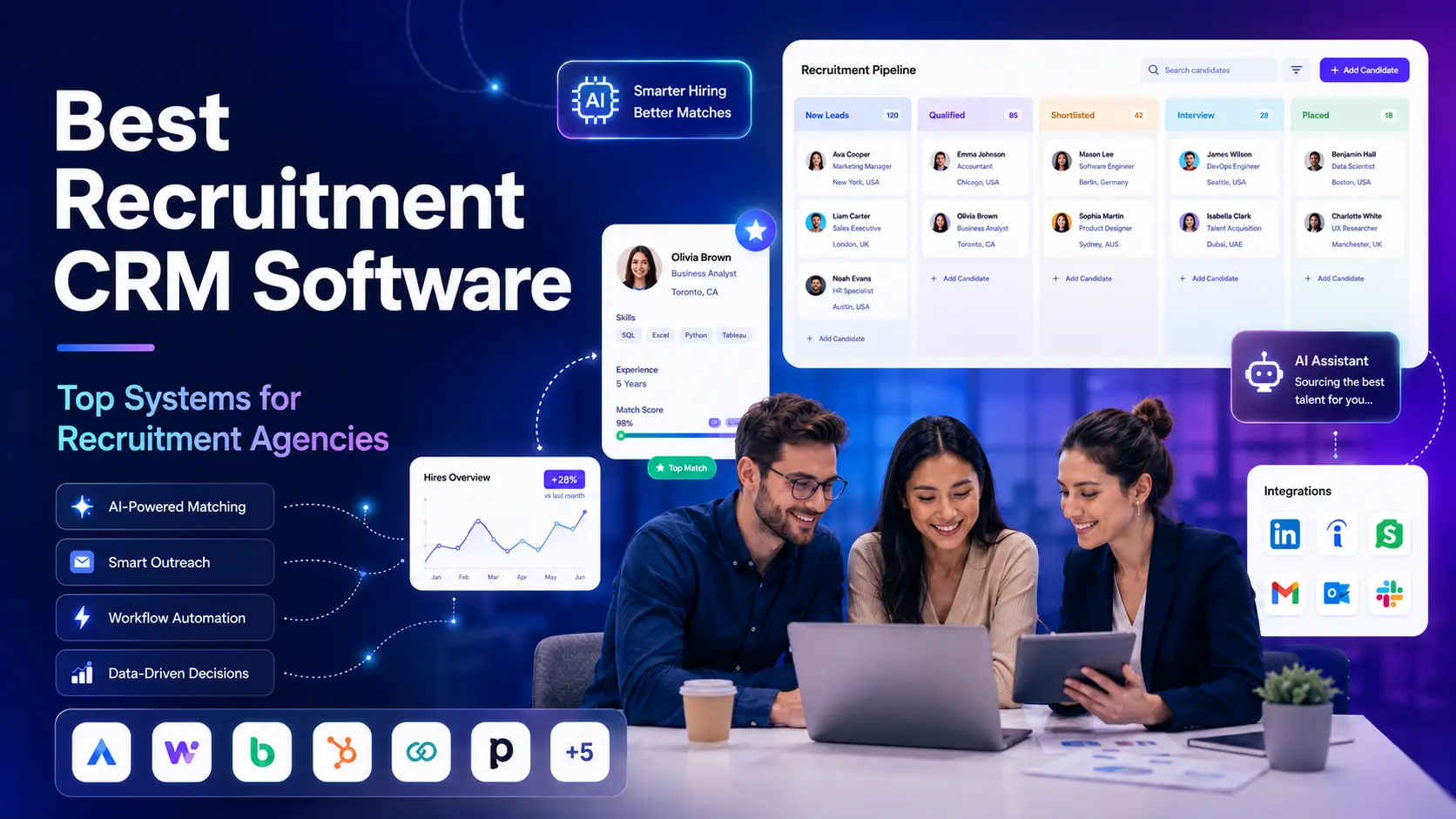
ATS CRM software is useful when your recruiting process does not fit neatly into either applicant tracking or relationship management. Agencies need to source candidates before they apply, manage client jobs, submit shortlists, track interviews, and keep warm candidates engaged for future roles.
If your team is asking whether ATS and CRM can work together, the better question is whether your workflow should live in one system from the start. A combined platform reduces duplicate records, missed follow-ups, and reporting gaps between sourcing and placement.
| Workflow | ATS handles | CRM handles | Combined ATS CRM handles |
|---|---|---|---|
| Active applicant pipeline | Applications, stages, interviews | Candidate history | One candidate record from apply to hire |
| Passive sourcing | Limited support | Outreach and nurturing | Sourcing lists tied to open jobs |
| Client recruitment | Basic job records | Deals and relationships | Client jobs, submissions, and revenue tracking |
| Reporting | Hiring funnel metrics | Relationship activity | Full pipeline, source, client, and placement view |
ATZ CRM brings these pieces together through its applicant tracking system and customer relationship management workflows, so recruiters can manage candidates and clients without switching tools.
ATS vs CRM Decision Guide
If you are choosing between an ATS, CRM, or combined ATS CRM software, start with the work your team does every day. A hiring team that only receives inbound applications has different needs from an agency that sources candidates, manages clients, and tracks placements.
| Your situation | Better fit | Reason |
|---|---|---|
| You mainly post jobs and process applicants | ATS | The work is application-heavy and stage-based |
| You nurture passive candidates for future roles | CRM | Relationship history and follow-ups matter more |
| You manage clients and candidate submissions | ATS CRM | Candidate and client workflows need to stay connected |
| You run executive or niche searches | ATS CRM | Long-term sourcing, notes, outreach, and reporting are all needed |
| You are replacing spreadsheets and inboxes | ATS CRM | A single database reduces duplicate work and missed updates |
For recruitment agencies, the combined option usually wins because the business is not just hiring for one employer. It is managing a market: clients, contacts, candidates, open jobs, submissions, interviews, offers, and future opportunities.
Must-Have ATS CRM Features
Not every platform that says “ATS CRM” gives recruiters a complete workflow. Check whether the system supports the work before and after the application.
| Feature | Why it matters |
|---|---|
| Unified candidate record | Prevents duplicate profiles across sourcing, applications, and placements |
| Client and contact management | Keeps business development connected to open roles |
| Job pipeline customization | Lets each role follow the right hiring stages |
| Candidate submissions | Tracks which candidates were sent to which clients |
| Email and activity history | Shows every touchpoint before the next follow-up |
| Automation and reminders | Reduces forgotten tasks and stale pipelines |
| Reporting dashboards | Helps managers see source quality, recruiter activity, and bottlenecks |
If these features live in separate tools, recruiters spend more time reconciling data than moving candidates forward. A unified platform keeps the relationship and applicant journey together.
What’s an ATS?
An Applicant Tracking System (ATS) is software designed primarily for handling, organizing, and filtering job applications. An ATS is the backbone of many hiring teams, automating repetitive tasks, storing resumes, and managing candidate profiles. ATS platforms often have features like resume parsing, automated email responses, and interview scheduling. They streamline the administrative side of hiring, making it possible to manage high volumes of applications while maintaining efficiency and compliance.
Core Functions of an ATS:
- Resume Sorting and Filtering: Automatically scan and sort resumes based on keywords or qualifications.
- Job Posting Automation: Post openings to multiple job boards simultaneously.
- Interview Management: Schedule interviews and communicate with candidates efficiently.
Related Read: Looking to get the most out of your ATS? Check out our blog on 10 Proven Recruitment Strategies for Maximum ATS ROI.
Why Do You Need an ATS?
If your goal is efficiency, an ATS is essential. This system is crucial for high-volume recruitment environments where time is limited, and the number of applicants is substantial. Here are key benefits:
- Saves Time and Resources: Automating tasks like resume sorting, email responses, and interview scheduling lets recruiters focus on more strategic work.
- Enhances Compliance: Many ATS platforms include features that support fair hiring practices and regulatory compliance, which is essential in heavily regulated industries.
- Improves Candidate Screening: By organizing candidate information and utilizing filters, an ATS enables recruiters to find qualified candidates faster, aiding in quick and efficient hiring.
For a high-volume hiring environment or organizations with complex compliance needs, an ATS is a game-changer.
What’s a CRM?
Candidate Relationship Management (CRM) software is designed to build, nurture, and manage relationships with potential candidates. Unlike ATS, which focuses on active applicants, CRM tools help recruiters engage passive candidates—those who aren’t actively looking but may be open to future opportunities. A CRM’s core strength lies in candidate outreach, nurturing, and engagement, making it indispensable for organizations focused on long-term talent acquisition.
Core Functions of a CRM:
- Candidate Engagement: Send automated, personalized messages to passive candidates.
- Pipeline Building: Maintain a pool of engaged candidates for future openings.
- Brand Building: Improve candidate experience by staying connected and responsive.
Related Read: If building a strong talent pipeline interests you, check out What is Recruitment Marketing?
Why Do You Need a CRM?
If you’re focused on building a talent pipeline, a CRM can be invaluable. Here’s how:
- Nurtures Long-Term Relationships: CRM software allows recruiters to maintain ongoing relationships with passive candidates, keeping them engaged through regular updates and nurturing until they’re ready to apply.
- Improves Candidate Experience: By facilitating personalized communication, a CRM provides a better experience for candidates, which can enhance your employer brand.
- Supports Strategic Hiring: By building a database of potential candidates, companies can proactively reach out when new roles open, reducing time-to-fill and helping to hire better-qualified candidates.
For companies with long-term hiring goals, a CRM is a vital tool to attract and maintain relationships with top talent.
ATS vs. CRM: The Key Differences
While both ATS and CRM software serve recruitment, they have distinct purposes. Fundamental differences:
- Core Focus: ATS targets job Screening, organizing applications, while CRM targets passive candidate relationships.
- Primary Function: ATS streamlines recruitment operations, whereas CRM builds talent pipelines.
- Time Frame: ATS is short-term and process-focused, while CRM emphasizes long-term relationship building.
- Best For: ATS is best for High-volume hiring, whereas CRM is best for Long-term talent pipeline
While an ATS keeps the wheels turning for your immediate hiring needs, a CRM helps ensure you have a strong, engaged talent pool ready to go for future needs.
Pro Tip: Many companies find success by integrating ATS and CRM tools to enjoy the best of both worlds.
Can ATS and CRM Work Together?
Absolutely! Many companies combine ATS and CRM to gain the best of both worlds. Here’s how:
Integrated Workflows: When an ATS and CRM work together, recruiters can maintain a database of passive candidates and track them from initial contact through application and hiring.
Enhanced Candidate Experience: Using both tools enables more personalized outreach and engagement, creating a seamless experience for candidates.
Improved Talent Pool: With both ATS and CRM, companies can both source and manage candidates effectively, creating a robust talent pipeline for future needs.
Combining an ATS and a CRM maximizes recruiting efficiency while building long-term relationships with candidates.
Using both ATS and CRM maximizes recruitment efficiency while building long-term relationships. Discover how combining ATS and CRM tools can enhance recruitment.
Benefits of Using an ATS
Why would a company invest in an ATS? Here are some key advantages:
- Efficiency in High-Volume Recruiting: An ATS automates time-consuming tasks, enabling recruiters to handle a higher volume of applicants.
- Compliance and Record-Keeping: With built-in tracking and reporting, an ATS helps businesses comply with equal opportunity and labor laws.
- Faster Hiring Process: By automating processes like resume sorting and interview scheduling, an ATS can reduce the time-to-hire metric significantly.
Related Read: Discover 10 Free Powerful ATS for Small Businesses for some options if you’re a smaller company on a budget.
Benefits of Using a CRM
CRM offers unique advantages when it comes to candidate relationship management:
- Long-Term Talent Engagement: A CRM keeps candidates engaged even when you’re not actively hiring, which is essential for building a strong talent pool.
- Enhanced Candidate Experience: By providing personalized communication, CRMs help improve candidate satisfaction and strengthen your brand.
- Better Quality Hires: Engaged candidates are often more invested, making them better-quality hires when a position becomes available.
See the importance of CRM in recruitment for a deeper dive.
When Should You Use ATS, CRM, or Both?
1. When to Use an ATS
If your company has a high volume of job openings or receives a large number of applications, an ATS will streamline your recruitment process. For example, large organizations, recruitment agencies, and industries with high turnover often benefit most from ATS features like resume filtering, automated job postings, and interview scheduling.
2. When to Use a CRM
A CRM is ideal for industries where the competition for talent is fierce, and the hiring process takes time. In fields like tech or healthcare, where top talent is constantly in demand, nurturing a candidate pool is crucial.
3. When to Use Both
For integrated approaches, many modern recruitment platforms now offer ATS-CRM solutions.Find more insights on combining ATS and CRM for talent acquisition.
Combining ATS and CRM functionalities gives you a robust hiring ecosystem. Many modern recruitment platforms now offer integrated ATS-CRM solutions that allow recruiters to manage immediate needs while building a long-term talent strategy.
Related Read: For insights into ATS-CRM integration, check out How to Streamline the Hiring Process: 10 Proven Ways.
The Future of ATS and CRM in Recruitment
As recruitment technologies evolve, so does the demand for seamless integrations between ATS and CRM tools. The industry is moving toward a hybrid approach, where companies use both tools to manage the entire hiring lifecycle effectively. The ideal scenario is a single platform that offers end-to-end solutions, helping organizations balance between immediate and long-term recruiting needs.
How ATZ CRM Solves Recruitment Challenges with ATS and CRM
At ATZ CRM, we understand that one size doesn’t fit all in recruitment. We offer tailored solutions that integrate ATS and CRM functionalities, helping recruitment teams achieve high efficiency, engage passive candidates, and reduce time-to-hire. If you’re considering implementing an ATS, CRM, or both, ATZ CRM offers solutions tailored to meet your needs. Our tools streamline the recruitment process, improve candidate relationships, and help create efficient, engaging hiring workflows.
Related Read: Dive into 7 Powerful Resume Parsing Tools for Hiring to learn how ATS and CRM tools can simplify resume sorting and improve hiring outcomes.
ATS vs. CRM: Quick Comparison
| Feature | ATS | CRM |
|---|---|---|
| Primary Use | Application tracking & processing | Candidate relationship nurturing |
| Best For | High-volume active applicants | Passive candidates & talent pipelines |
| Automation | Resume parsing, screening, scheduling | Email sequences, follow-ups, engagement |
| Reporting | Time-to-fill, pipeline stage metrics | Source of hire, relationship quality |
| Integration | Job boards, HRIS, background checks | LinkedIn, email, social platforms |
| Ideal Team | In-house HR / corporate hiring | Recruitment agencies, executive search |
FAQs
Q1. What is the main difference between an ATS and a CRM?
An ATS (Applicant Tracking System) manages active applicants who have already applied for a role — tracking their progress through stages like screening, interview, and offer. A CRM (Candidate Relationship Management) focuses on building relationships with passive candidates before they apply, keeping them warm for future roles.
Q2. Can a small business get by with just an ATS?
For purely reactive hiring — posting jobs and processing inbound applications — an ATS alone can work. But as your hiring volume grows or you need to source passive talent, a CRM becomes essential. Many platforms like ATZ CRM now combine both into a single system.
Q3. Which is better for a recruitment agency: ATS or CRM?
Recruitment agencies typically benefit more from a combined ATS+CRM solution. They need the candidate relationship management capabilities of a CRM (to nurture passive talent) alongside ATS features for submitting candidates to clients efficiently.
Q4. Do ATS and CRM systems integrate with each other?
Yes. Many modern platforms offer native integration or can connect via APIs. However, using a unified ATS+CRM platform like ATZ CRM eliminates integration complexity entirely — all data lives in one place, updated in real time.
Q5. Is ATZ CRM an ATS, a CRM, or both?
ATZ CRM is a combined ATS+CRM platform purpose-built for recruitment agencies. It handles the full hiring funnel — from sourcing passive candidates and managing client relationships to tracking applicants and automating interview scheduling — in a single, affordable tool.
Conclusion
Whether your focus is on high-volume recruiting, long-term engagement, or both, choosing the right tool is essential to achieving hiring success. An ATS offers efficiency for immediate needs, while a CRM fosters relationships that can yield high-quality hires over time. For the most robust solution, consider integrating both ATS and CRM functionalities—because in the world of recruitment, it’s always better to be prepared than to scramble for talent.
Related Read: Learn more about 12 Best Recruitment CRMs for Agencies to discover how the right CRM can transform your talent engagement.