




Quick Answer
To boost contract staffing performance, agencies need to improve the parts of the operation that directly affect speed, margin, and repeat revenue. That means better job intake, stronger contractor databases, accurate burden and bill-rate calculations, faster timesheet approval, automated redeployment, compliance workflows, client visibility, and CRM reporting.
The agencies that rank, win clients, and scale in 2026 are not simply placing more contractors. They are building a repeatable contract staffing system: one source of truth for clients and contractors, clear pricing discipline, faster order-to-cash workflows, and enough automation to keep recruiters focused on relationships instead of admin.
This guide gives you 10 practical contract staffing strategies you can use to improve recruiter efficiency, protect margins, and grow a more predictable staffing business.
Why Contract Staffing Efficiency Matters
Contract staffing is attractive because it can create recurring revenue. A contractor who works 40 hours per week for several months can generate steady margin long after the initial placement. But that same model also exposes weak operations quickly.
If timesheets are late, invoices are delayed. If margins are calculated incorrectly, a high-volume account can become unprofitable. If contractors are not redeployed, the agency keeps paying to source new people while proven workers disappear. If client communication is scattered across inboxes, recruiters waste hours answering status-update emails.
That is why contract staffing efficiency is not just an operations topic. It is an SEO topic, a sales topic, and a profitability topic. Clients want agencies that can move quickly and communicate clearly. Recruiters want workflows that do not bury them in manual updates. Owners want margin, cash flow, and repeat business.
If you need the broader foundation first, read the full contract staffing playbook. This article focuses on execution: the specific moves that make a contract staffing desk faster and more profitable.
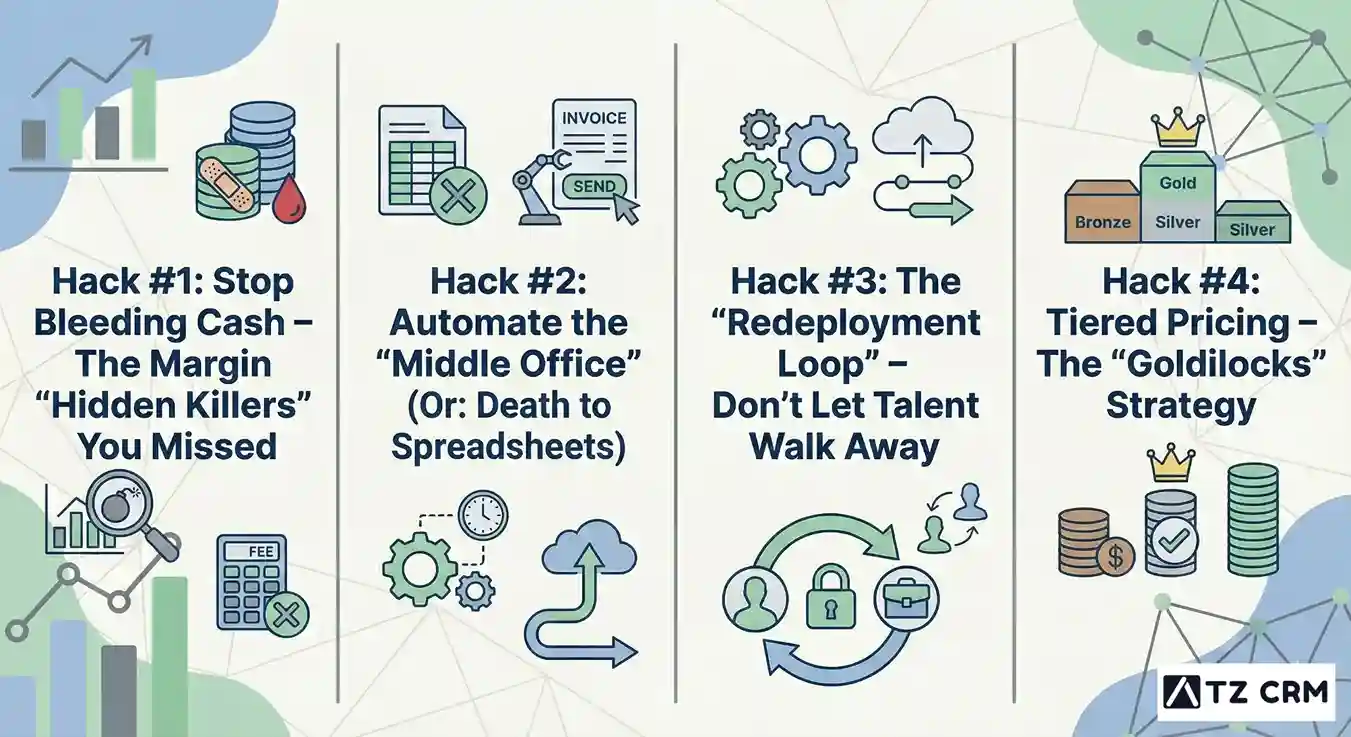
1. Price Every Contract From True Margin, Not Guesswork
Many contract staffing agencies think they know their margin because they know the pay rate and bill rate. That is not enough.
True margin depends on all costs connected to the assignment:
- Contractor pay rate
- Employer taxes or payroll costs
- Workers’ compensation
- Insurance
- Background checks
- Drug screening where required
- Payroll provider or employer-of-record fees
- Benefits or statutory costs where applicable
- Non-billable holidays or paid leave
- Recruiter commission
- Job board or sourcing cost
- Client-specific administrative requirements
The common mistake is quoting a markup without testing whether the assignment is still profitable after burden, payment delays, and operational cost. A contract can look healthy at the gross revenue level and still leak profit underneath.
Build a pricing calculator your recruiters and account managers actually use. At minimum, it should show pay rate, bill rate, markup, estimated burden, gross margin dollars, gross margin percentage, invoice terms, and risk notes. If the client requests custom reporting, overtime rules, unusual insurance requirements, or non-standard payment terms, those should influence pricing.
CRM workflow to add: store pay rate, bill rate, margin, contract dates, client terms, and assignment notes inside the job or placement record. If this data lives only in spreadsheets, leaders cannot easily spot underpriced accounts.
2. Standardize Contract Job Intake Before Recruiters Start Sourcing
Contract staffing speed starts with intake. If the client brief is weak, recruiters waste time chasing candidates who cannot accept the role.
A good contract staffing intake form should capture:
- Role title and project context
- Required skills and nice-to-have skills
- Start date and expected duration
- Work location or remote policy
- Work authorization requirements
- Pay range and bill rate target
- Interview process
- Required tools, certifications, or credentials
- Timesheet approval contact
- Equipment and onboarding expectations
- Extension or contract-to-hire possibility
- Compliance requirements
This turns a vague request into searchable data. It also gives recruiters a better candidate pitch. Contractors want to know the project, rate, duration, tools, remote expectations, and likelihood of extension. If the recruiter has to return to the client for every detail, speed disappears.
Efficiency move: create one intake template by vertical. IT contracting, healthcare staffing, blue collar staffing, and call center contract roles often need different compliance fields. A generic intake form is better than nothing, but a niche-specific form is stronger.
3. Build a Searchable Contractor Bench Before Roles Open
Reactive sourcing is expensive. If every contract role starts with a blank search, your agency will struggle to compete with firms that already have a warmed-up contractor bench.
A virtual contractor bench is not just a list of resumes. It is a segmented talent pool with current data.
Track fields such as:
- Core skill set
- Secondary skills
- Industry experience
- Rate expectation
- Availability date
- Location and remote preference
- Contract preference
- Contract-to-hire interest
- Work authorization
- Certifications
- Last contact date
- Last assignment date
- Performance notes
- Redeployment status
For example, if a client needs Salesforce contractors, you should be able to filter by Salesforce Admin, Developer, Consultant, Architect, Sales Cloud, Service Cloud, CPQ, certifications, availability, rate, and remote preference. If you are staffing warehouse supervisors, you may need shift preference, forklift certification, safety training, location, overtime availability, and previous client feedback.
CRM workflow to add: create saved searches or talent pools for your highest-demand roles. Review them weekly so recruiter outreach is proactive, not panic-driven.
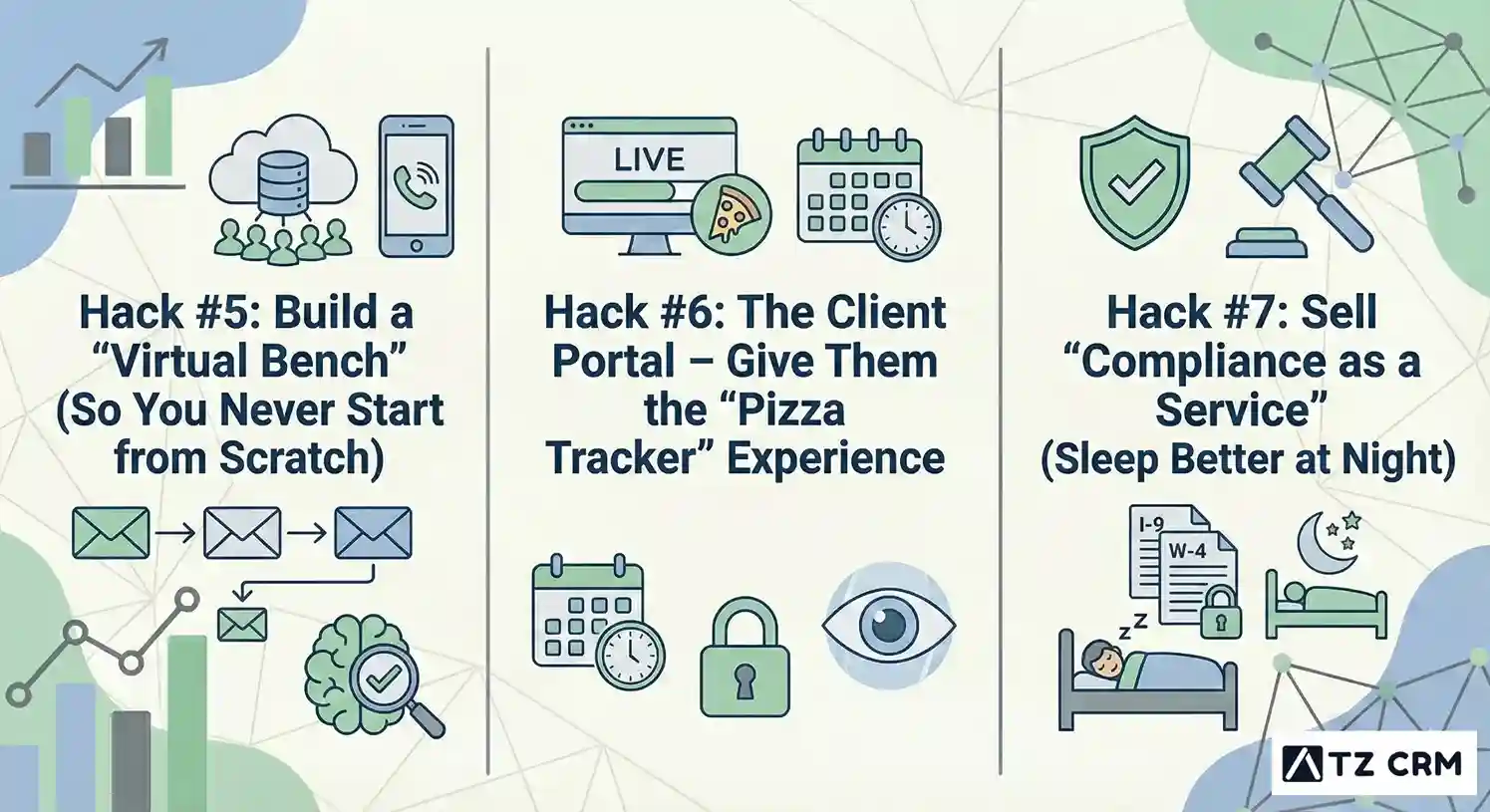
4. Automate Contractor Redeployment Before the Assignment Ends
Redeployment is one of the most important contract staffing strategies because it improves speed and margin at the same time. A contractor who has already completed a successful assignment is easier to place than a brand-new candidate.
The mistake is waiting until the contract ends. By then, the contractor may already be interviewing elsewhere.
Create a redeployment workflow that starts before the end date:
- 45 days before end: check client extension likelihood.
- 30 days before end: ask the contractor about future availability.
- 21 days before end: match the contractor to open roles.
- 14 days before end: start active redeployment outreach.
- 7 days before end: confirm next steps, extension, or offboarding.
This workflow should be automated in your CRM. Recruiters still own the relationship, but the system should trigger the reminder and surface matching jobs.
Measure redeployment rate by recruiter, client, role type, and source. A low redeployment rate usually means the agency is treating contractors like transactions instead of long-term revenue assets.
5. Shorten the Timesheet-to-Invoice Cycle
Timesheets are not glamorous, but they are one of the biggest profit levers in contract staffing. Late timesheets delay billing. Delayed billing stretches cash flow. Cash-flow pressure limits growth.
A strong timesheet workflow should include:
- Contractor reminders before the deadline
- Mobile-friendly submission
- Clear client approval rules
- Escalation when approvals are late
- Audit trail for disputes
- Connection to payroll or invoicing workflow
- Reporting on approval speed by client
The goal is to reduce the gap between work performed, hours approved, invoice sent, and cash collected.
If a client regularly delays approvals, that is not only an admin problem. It is a client management problem. Account managers should use data to address it in business reviews.
CRM workflow to add: track timesheet status or integrate with a back-office tool. Recruiters do not need to run payroll manually, but they do need visibility when a placement is blocked by missing hours or client approval.
6. Turn Compliance Into a Client Value Proposition
Compliance is often discussed as a risk, but it can also be a selling point. Many clients use contract staffing agencies because they do not want to manage every detail of worker classification, documentation, background checks, insurance, and onboarding.
Contract staffing compliance can include:
- Identity and work authorization checks
- W-4, W-9, or local tax forms where applicable
- I-9 or employment eligibility documentation where applicable
- Background checks
- Drug screening
- License or certification verification
- Workers’ compensation codes
- Safety training
- Client-specific onboarding documents
- Contract-to-hire conversion terms
- Data privacy and confidentiality terms
Do not oversell legal protection, and always use proper legal guidance for contracts. But do show clients that your agency runs a disciplined compliance process. That can differentiate you from agencies that only send resumes.
Sales positioning: “We do not just find contractors. We manage a repeatable contractor onboarding and documentation workflow so your hiring team gets speed without chaos.”
7. Give Clients Better Visibility With Portals and Status Workflows
Clients ask for updates because they do not have visibility. Every “any update?” email pulls recruiters away from sourcing and closing.
A client-facing workflow should make it easy for clients to see:
- Open contract roles
- Submitted candidates
- Interview status
- Feedback needed
- Placement status
- Start dates
- Timesheet approvals where relevant
- Renewal or extension reminders
You do not need to expose every internal note. The point is to reduce status friction and make the client feel the process is moving.
Client portals are especially useful in contract staffing because relationships are ongoing. Permanent recruitment may involve one hire. Contract staffing may involve active assignments, renewals, extensions, replacements, and future roles.
CRM workflow to add: create client-specific dashboards or portal views where possible. If the system cannot support a portal, use automated weekly status updates by account.
8. Use Tiered Service Levels to Protect Recruiter Capacity
One reason contract staffing agencies lose efficiency is that every client expects the highest service level at the lowest price. If a client wants 24-hour turnaround, custom reports, dedicated account management, compliance support, and weekly performance reviews, the fee model should reflect that.
Create service levels such as:
| Service tier | Best for | What it includes |
|---|---|---|
| Standard | Occasional contract hiring | Role intake, sourcing, screening, standard submissions |
| Priority | Faster recurring contract needs | Faster shortlist targets, structured updates, redeployment planning |
| Strategic | High-volume or long-term staffing programs | Dedicated account owner, custom reporting, workforce planning, QBRs |
This helps account managers sell value instead of defending markup. It also prevents scope creep. When clients ask for extra services, your team has a clean way to discuss an upgrade.
CRM workflow to add: record client service tier, SLA, reporting cadence, and promised turnaround time in the account record.
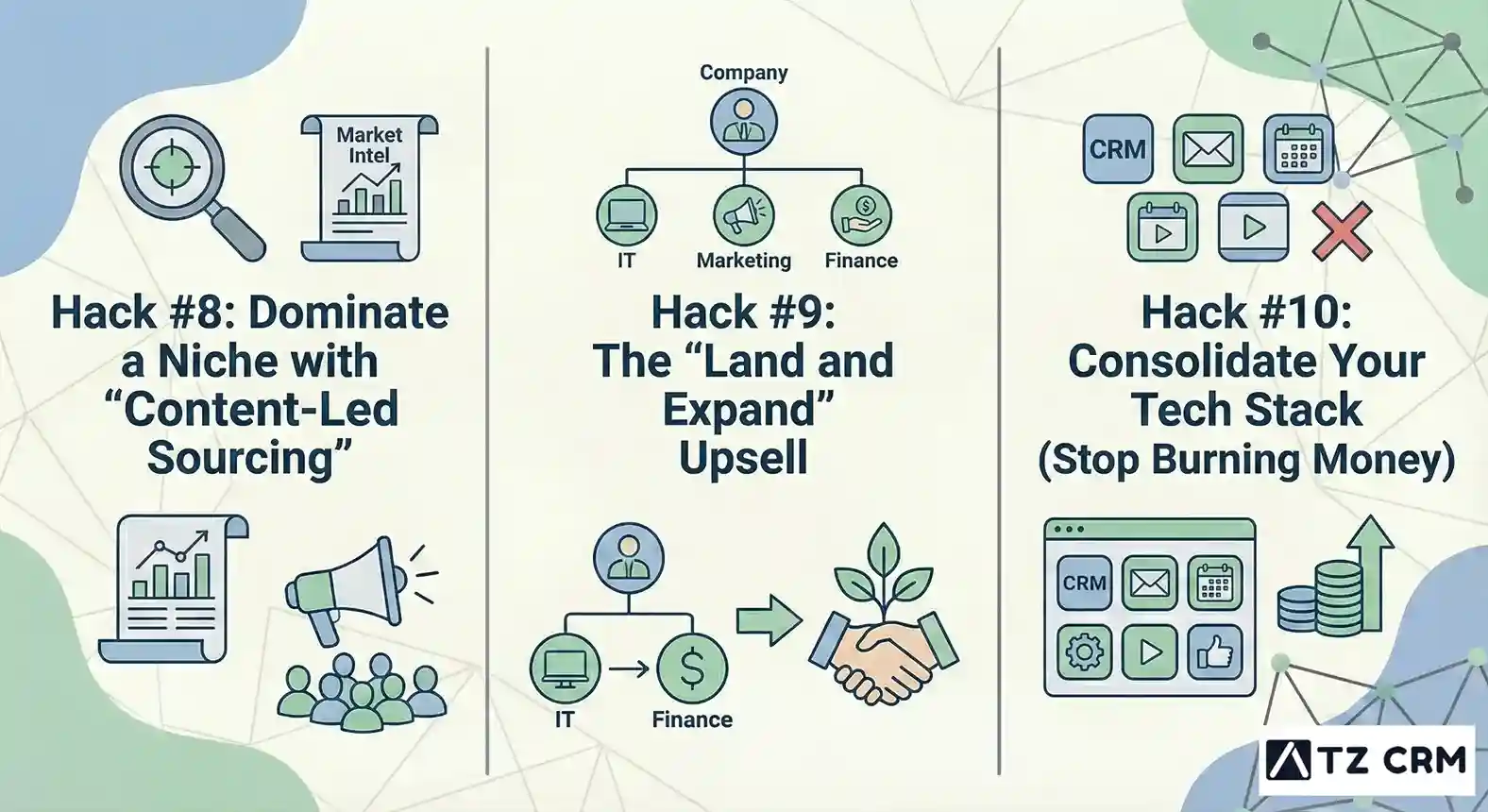
9. Win More Contract Staffing Business Through Niche Authority
Generalist staffing agencies are easy to compare on price. Specialist contract staffing agencies are easier to trust.
Niche authority helps with both SEO and sales. If your agency serves tech contracting, create content and outreach around specific roles like Salesforce contractors, cybersecurity analysts, DevOps engineers, or data engineers. If you serve blue collar staffing, build pages and outreach around warehouse supervisors, forklift operators, skilled trades, or manufacturing maintenance.
Niche authority should show up in:
- Website content
- Recruiter outreach
- Candidate tags
- Client case studies
- Salary and rate guides
- Role-specific screening questions
- Talent pool segmentation
- Job ads
- LinkedIn posts
Clients want evidence that you understand their world. Contractors want agencies that understand their skill set and rate expectations. A niche strategy makes both sides easier to convert.
CRM workflow to add: tag every client and contractor by niche, role family, and skill category. This makes content-led sourcing easier because your marketing and recruiting data are connected.
10. Consolidate Your ATS, CRM, and Contract Staffing Workflows
Tool sprawl quietly damages staffing agency efficiency. A recruiter may use one system for resumes, another for client notes, another for email sequences, another for scheduling, another for timesheets, and another spreadsheet for placements.
The more tools you use, the harder it becomes to answer simple questions:
- Which clients have open contract roles?
- Which contractors are available next month?
- Which candidates were submitted to this client?
- Which contracts are ending soon?
- Which placements have margin risk?
- Which clients are slow to approve timesheets?
- Which recruiters are driving redeployment?
A unified ATS and CRM gives the agency one operating view. The goal is not to force every back-office function into one product. The goal is to make sure candidates, clients, jobs, placements, outreach, and reporting are connected.
ATZ CRM helps recruitment agencies manage candidate pipelines, client relationships, job orders, outreach, submissions, placements, and reporting in one workspace. For contract staffing teams, that means recruiters can move from client demand to contractor search to placement follow-up without losing context.
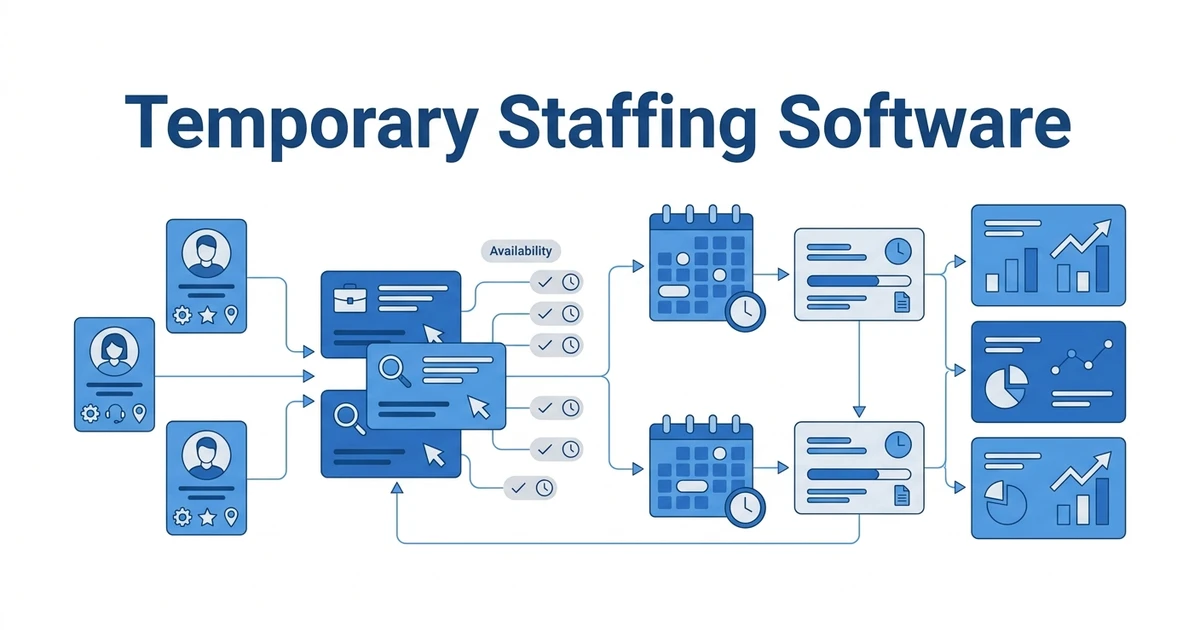
For deeper operational setup, see contract staffing software and the broader best recruitment CRM software guide.
Contract Staffing Metrics to Track
Improvement gets much easier when the team agrees on the numbers. Contract staffing agencies should track metrics across sales, recruiting, operations, and finance.
Useful metrics include:
- Open contract roles
- Time to submit
- Time to fill
- Fill rate
- Submittal-to-interview ratio
- Interview-to-placement ratio
- Gross margin by client
- Gross margin by role type
- Contractor redeployment rate
- Assignment completion rate
- Extension rate
- Timesheet approval speed
- Days sales outstanding
- Client retention
- Contractor satisfaction
- Recruiter activity
Do not track everything just to fill a dashboard. Pick the metrics that help managers make decisions. If gross margin is falling, review pricing. If time to submit is slow, fix bench segmentation. If redeployment is weak, trigger earlier end-date workflows.
A 30-Day Contract Staffing Efficiency Plan
If your agency needs a practical starting point, use this 30-day plan.
Week 1: Audit Your Current Workflow
Review the last 20 contract placements. Look for bottlenecks in intake, sourcing, submission, contract setup, timesheets, invoicing, and redeployment. Identify where recruiters spend the most manual time.
Week 2: Clean the Contractor Database
Add or standardize fields for availability, rate, location, role family, contract preference, last contact date, assignment end date, and redeployment status. Create saved searches for your top recurring roles.
Week 3: Build Automation Triggers
Set reminders for contract end dates, client extension checks, contractor availability updates, timesheet follow-ups, and candidate re-engagement. Start with a few high-impact triggers before expanding.
Week 4: Review Pricing and Client Visibility
Check whether your top clients are profitable after burden and admin cost. Add service tier notes and standard status updates. Prepare a simple client review template for high-value accounts.
By the end of 30 days, your agency should have better visibility into margin, contractor availability, redeployment opportunities, and operational friction.
Where ATZ CRM Fits
ATZ CRM is built for recruitment teams that need both candidate management and client relationship management. For contract staffing, that matters because success depends on connecting both sides of the workflow.
Agencies can use ATZ CRM to organize contractor profiles, manage client conversations, track job pipelines, segment talent pools, coordinate outreach, monitor submissions, and keep placement activity visible across the team.
The biggest benefit is clarity. Recruiters should not need five tools to know who is available, which client needs a contractor, which assignments are ending, and what follow-up is due today.
Conclusion
Contract staffing growth does not come from placement volume alone. It comes from controlling the repeatable parts of the business: pricing, intake, sourcing, redeployment, timesheets, compliance, client visibility, service tiers, niche positioning, and CRM data.
The agencies that win in 2026 will be fast, specialized, and operationally disciplined. They will know their margins, maintain active contractor benches, redeploy proven workers, communicate clearly with clients, and use software to remove unnecessary manual work.
If your contract staffing desk is growing but still feels chaotic, that is usually a systems problem. Fix the workflow, connect your ATS and CRM data, and give recruiters a cleaner way to manage clients, contractors, jobs, and placements.
Ready to tighten your contract staffing workflow? Request a demo and see how ATZ CRM helps agencies manage candidate, client, and placement activity in one place.
FAQs
What are the best ways to improve contract staffing efficiency?
The best ways to improve contract staffing efficiency are to standardize job intake, track true margin, build segmented contractor benches, automate redeployment reminders, shorten timesheet approvals, centralize compliance, and use CRM reporting to identify bottlenecks.
How can contract staffing agencies increase profit margins?
Agencies can increase contract staffing margins by pricing from true burden, reducing job board dependency, redeploying proven contractors, preventing scope creep with service tiers, improving timesheet-to-invoice speed, and reviewing client profitability regularly.
Why is redeployment important in contract staffing?
Redeployment reduces sourcing cost and improves time to fill because the agency already knows the contractor’s skills, reliability, rate, and work preferences. It also improves contractor loyalty by helping workers move from one assignment to the next.
What software features help contract staffing agencies?
Useful software features include client CRM, contractor database search, tags and segmentation, pipeline tracking, bulk outreach, compliance reminders, assignment end-date alerts, timesheet visibility, reporting, and integrations with back-office tools.
What metrics should contract staffing agencies track?
Track gross margin, time to submit, time to fill, fill rate, redeployment rate, contractor utilization, assignment completion rate, extension rate, timesheet approval speed, days sales outstanding, and client retention.
Blog Summary
- Protect margin by pricing from true burden, not only pay rate and bill rate.
- Improve recruiter speed with standardized job intake and segmented contractor benches.
- Increase profitability with proactive contractor redeployment before assignments end.
- Reduce cash-flow pressure by shortening the timesheet-to-invoice cycle.
- Use CRM workflows to manage compliance, client visibility, service tiers, reporting, and contract staffing growth.